
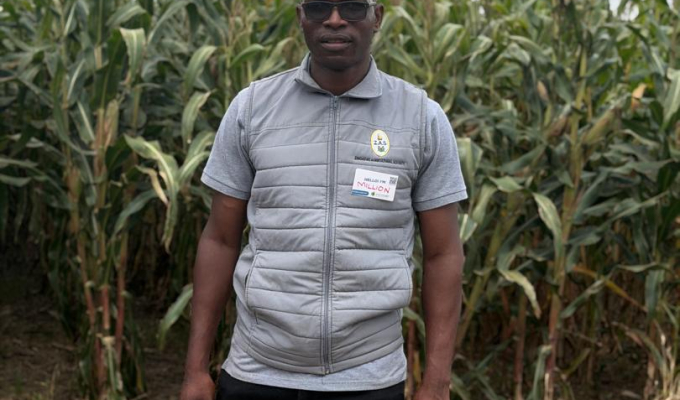
p>By Miriyoni Tawonga, Head of Agricultural Development, Zimbabwe Agricultural Society
The reality of Sub-Saharan Africa today is increasingly shaped by a convergence of global and local crises, where climate variability and geopolitical conflict interact in ways that deepen vulnerability and strain already fragile systems. The ongoing tensions involving Israel, the United States, and Iran illustrate how distant conflicts can produce far-reaching consequences, extending well beyond their immediate geography.
For many countries across Sub-Saharan Africa, the effects are not abstract; they are felt in:
- Rising fuel prices
- Disrupted supply chains
- Increasing costs of agricultural production
These pressures come at a time when the region is already grappling with climate variability—including erratic rainfall, prolonged droughts, and destructive floods—all of which undermine agricultural productivity and food security.
Agriculture on the Frontline
Agriculture remains the backbone of most economies in Sub-Saharan Africa, supporting livelihoods, employment, and national food systems. However, the sector is highly sensitive to both environmental and economic shocks. When the global economic ripple effects of conflict are compounded by climate disruptions, the result is a severe constraint on farmers’ ability to produce efficiently.
In this context, food insecurity becomes not only a rural issue but a broader societal challenge affecting urban and peri-urban populations as well.
Rising input costs, especially for fuel and fertilizers, make it increasingly difficult for smallholder farmers to sustain production, while higher transport costs push food prices beyond the reach of many households.
Economic and Humanitarian Fallout
The economic implications are equally significant. Many Sub-Saharan African countries rely heavily on imports for fuel, agricultural inputs, and even staple foods. When global conflicts trigger price volatility, these economies face inflationary pressures that erode purchasing power and strain government budgets.
This has profound humanitarian consequences. Communities already affected by droughts or floods are pushed further into vulnerability when food becomes scarce and expensive, often leading to displacement and competition over limited resources like land and water.
The Path to Resilience: A Call for Transformation
Despite these challenges, the current situation highlights the urgent need for a paradigm shift. There is a growing recognition that reliance on external systems creates exposure to global shocks. The path forward requires a focus on building local and regional resilience.
Key strategies include:
- Strengthening local and regional value chains
- Investing in climate-smart agriculture
- Improving water and land management systems
- Diversifying energy sources
Building resilience also requires stronger institutions, better data systems, and coordinated efforts between governments, the private sector, and development partners.
Conclusion: From Vulnerability to Strength
The convergence of climate variability and geopolitical conflict represents a new development reality for Sub-Saharan Africa. The experiences of countries across the region demonstrate that resilience is no longer optional but essential. By focusing on sustainable agricultural systems, economic diversification, and inclusive development, Sub-Saharan Africa can begin to transform vulnerability into strength, ensuring that it is better prepared to withstand both environmental shocks and the far-reaching impacts of global conflicts.
Contact: Miriyoni Tawonga | 0773 045 990
