
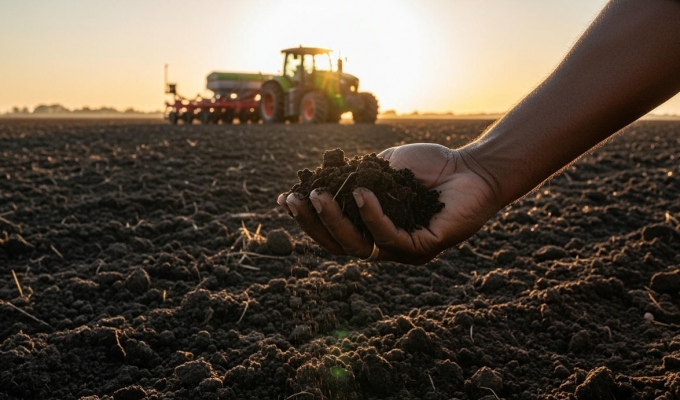
The transition to the summer planting season is a critical time for every farmer. The success of your harvest is not determined by the seeds you sow, but by the meticulous, well-researched groundwork you lay before the first seed touches the soil. In climates characterized by intense heat and variable rainfall, a deep, comprehensive pre-season preparation is the foundation for maximizing yield, conserving precious resources, and mitigating the risks of a challenging growing period.
This expanded guide delves into the advanced considerations across the three pillars of summer farming success: Soil Health, Water Management, and Operational Readiness.
The Foundation: Advanced Soil Health and Fertility
Your soil is your most valuable asset, and in hot, dry conditions, its resilience is paramount. Moving beyond basic testing, a deeper understanding of soil dynamics is required.
Comprehensive Soil Testing and Interpretation
While basic pH and NPK testing are essential, a more in-depth analysis provides the data needed for precision farming.
- Micronutrient Analysis: Test for critical micronutrients like Zinc (Zn), Boron (B), and Manganese (Mn), which can become less available in dry or high-pH soils. Deficiencies in these elements can severely limit yield, even if macronutrients are sufficient.
- Organic Matter and Carbon: Request a test for soil organic matter (SOM) and active carbon. SOM is the soil's sponge and nutrient bank, directly correlating with water holding capacity and soil structure, which are crucial buffers against heat stress [1].
- Interpreting Results in Dry Conditions: Be aware that sampling during a prolonged dry spell can lead to misleadingly low results for nutrients like Phosphorus (P) and Potassium (K), and potentially lower pH readings. It is advisable to sample when soil moisture is near field capacity, or to interpret dry-sample results with caution, considering the long-term fertility history of the field [2].
Enhancing Soil Structure for Water Retention
In hot climates, the goal is to maximize the soil's ability to absorb and hold water, reducing runoff and evaporation.
- Deep Incorporation of Organic Amendments: Adding high-quality, well-rotted compost or manure, and incorporating it deeply, significantly improves soil aggregation. This creates macropores for better water infiltration and micropores for water retention [3].
- Conservation Tillage: Minimizing or eliminating tillage (no-till or reduced-till) is a powerful strategy. It leaves crop residue on the surface, which acts as a protective mulch, reduces soil temperature, and prevents the loss of organic matter and moisture through wind and water erosion.
- Cover Cropping Strategy: Utilize summer-active cover crops (e.g., certain legumes or grasses) to maintain living roots in the soil for as long as possible. This practice feeds the soil microbiome, improves structure, and provides a "green mulch" that shades the soil, keeping it cooler and reducing evaporation [4].
Water Wisdom: Precision Management and Conservation
Water is the most limiting resource. Success hinges on calculating precise crop needs and implementing highly efficient delivery systems.
Calculating Crop Water Requirements (ETc)
Move from guesswork to precision by calculating the actual water needs of your crop, known as Crop Evapotranspiration.
- The Formula: is calculated by multiplying the reference evapotranspiration which is the rate of water loss from a standardized grass surface—by a crop coefficient
- Reference Evapotranspiration:This value is derived from local weather data (temperature, humidity, wind speed, solar radiation) and is often available from local agricultural extension services or weather stations.
- Crop Coefficient: This factor accounts for the specific crop type and its stage of growth. It changes significantly from the initial growth stage to the mid-season stage. Using the correct moisture for the current growth stage prevents both under- and over-watering.
Advanced Irrigation System Management
Efficiency in water delivery is critical.
- Pressure and Flow Monitoring: Regularly monitor the pressure and flow rate across your entire irrigation system. Variations indicate blockages, leaks, or pump issues that compromise uniformity. Non-uniformity can lead to significant yield losses in stressed areas.
- Soil Moisture Monitoring: Supplementing calculations with in-field soil moisture sensors (e.g., tensiometers, capacitance probes) provides real-time feedback on how much water the soil is actually holding and where the root zone is drawing moisture from. This allows for irrigation scheduling based on plant need, not just a calendar [6].
Maximizing Water Use Efficiency (WUE)
- Strategic Mulching: A thick, consistent layer of organic mulch (at least 5-10 cm) or plastic mulch is proven to reduce soil water evaporation by up to 70% [7]. This is a non-negotiable practice in hot, dry climates.
- Drip Irrigation: Where feasible, transition to drip or micro-sprinkler irrigation. These systems deliver water directly to the root zone, minimizing losses to wind drift and surface evaporation compared to overhead systems.
Operational Readiness and Integrated Risk Mitigation
A prepared operation anticipates challenges and has systems in place to manage them, especially the increased pressure from pests and diseases in summer.
Precision Planter Calibration
Accurate planting is the first step to a uniform, high-yielding crop.
- Seed Spacing and Depth: Calibrate your planter for the specific seed size and desired population. Incorrect depth can lead to poor germination, especially in dry topsoil. Ensure the closing wheels are set correctly to achieve optimal seed-to-soil contact without compacting the soil above the seed.
- Downforce Management: In no-till or reduced-till systems, proper downforce is essential to cut through residue and achieve consistent depth. Too little downforce results in "skipping," while too much causes severe sidewall compaction, which restricts root growth.
Integrated Pest Management (IPM) Strategy
Summer heat often accelerates the life cycles of pests and pathogens. An IPM approach is essential for sustainable control.
- Monitoring and Scouting: Establish a rigorous scouting schedule. Early detection of pests (e.g., mites, aphids, bollworms) or disease symptoms is the most cost-effective form of control. Use pheromone traps or sticky cards to monitor pest populations before they reach economic thresholds.
- Cultural Controls: Implement cultural practices that disrupt pest cycles. This includes crop rotation (to break the cycle of soil-borne pests), managing planting dates (to avoid peak pest periods), and ensuring proper plant nutrition (healthy plants are more resilient).
- Biological Controls: Where possible, utilize natural enemies (predators, parasitoids) to manage pest populations. This is a cornerstone of sustainable IPM and reduces reliance on chemical controls [8].
Contingency Planning for Extreme Weather
- Heat Stress Mitigation: Have a plan for managing crops during extreme heatwaves. This may involve adjusting irrigation schedules, applying anti-transpirants (if economically viable), or ensuring adequate nutrient supply to help the plant cope with stress.
- Insurance and Financial Risk: Review your crop insurance policies to ensure adequate coverage for drought, excessive heat, or other summer-specific weather risks.
Before You Plant: The Advanced Checklist
|
Area |
Action |
Advanced Focus |
|
Soil Testing |
Conduct comprehensive soil analysis. |
Include micronutrients and active carbon; interpret results with dry-soil caution. |
|
Soil Structure |
Incorporate organic matter and manage tillage. |
Deep incorporation of compost; implement conservation tillage (no-till) to preserve moisture. |
|
Water Needs |
Calculate crop water requirements. |
Use formulas and growth-stage specific values for precision irrigation scheduling. |
|
Water Delivery |
Audit and upgrade irrigation system. |
Monitor pressure/flow uniformity; install soil moisture sensors for real-time feedback. |
|
Planting |
Calibrate planting equipment. |
Calibrate for seed size, spacing, and depth; manage downforce to prevent sidewall compaction. |
|
Pest/Disease |
Develop an Integrated Pest Management (IPM) plan. |
Establish rigorous scouting; prioritize cultural and biological controls over chemical intervention. |
By adopting these advanced preparation strategies, you are not just preparing a field; you are building a resilient, high-performance farming system capable of thriving through the challenges of the summer season. A prepared farmer is a successful farmer.
Read more
[1] Soil Health | Natural Resources Conservation Service - https://www.nrcs.usda.gov/conservation-basics/natural-resource-concerns/soil/soil-health [2] Beware of Dry Conditions When Soil Sampling and Interpreting Test Results - https://crops.extension.iastate.edu/cropnews/2022/10/beware-dry-conditions-when-soil-sampling-and-interpreting-test-results [3] What Are the Best Practices for Summer Soil Maintenance? - https://ltdnurserylandscaping.com/articles/what-are-the-best-practices-for-summer-soil-maintenance/ [4] A Comprehensive Guide to Pre-Season Preparation for Farmers: Maximizing Yield and Efficiency - https://www.dultmeier.com/a-comprehensive-guide-to-pre-season-preparation-for-farmers-maximizing-yield-and-efficiency [5] CHAPTER 2: CROP WATER NEEDS - https://www.fao.org/4/s2022e/s2022e02.htm [6] Guidelines for Predicting Crop Water Requirements. - https://www.nrc.gov/docs/ML1821/ML18215A282.pdf [7] Maximizing Crop Yields: Best Practices for Summer Farm Management - https://soilfumigation.com/2025/05/maximizing-crop-yields-best-practices-for-summer-farm-management/ [8] Pest Control in Summer Agriculture: Keeping Your Crops Safe and Healthy - https://krishibazaar.in/blog/pest-control-in-summer-agriculture-keeping-your-crops-safe-and-healthy?srsltid=AfmBOooyNiP9T2sh0BFtTC8Zayk-qkyelQHuZYJIlEKVmSojJwGz-KBn
