
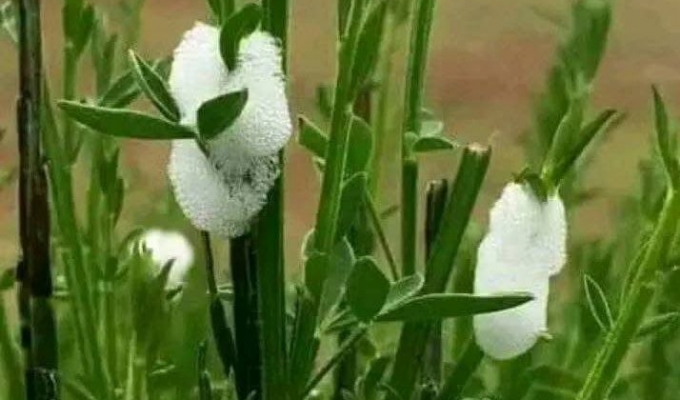
If you've ever walked through a grassy field or looked closely at your garden plants, you've likely seen it: a frothy, white substance that looks like a glob of spit. For generations, many of us were told this was "snake saliva" or "snake spit," a mysterious residue left behind by a slithering reptile. But what if we told you that this common belief is a complete myth? The real culprit is a tiny, fascinating insect that has more in common with a bubble bath than a serpent.
Debunking the Myth: What is That Foam Really?
The foamy substance, often called "cuckoo spit" or "frog spit" in different parts of the world, is not saliva at all. It's a cleverly constructed protective home created by the immature stage of an insect known as the spittlebug. These young insects, called nymphs, produce the foam to hide from predators, stay insulated from extreme temperatures, and keep themselves from drying out.
Meet the Spittlebug: Nature's Tiniest Bubble-Maker
Spittlebugs are the juvenile form of an insect family called froghoppers (Cercopoidea). The adults are called froghoppers because of their incredible jumping ability—some can leap more than 100 times their own body length! But before they can hop, they live as spittlebug nymphs, encased in their bubbly fortresses.
So, how do they create this amazing foam? It's a fascinating biological process. The spittlebug nymph feeds on the sap from plants by piercing the stem. It then excretes a liquid that is mixed with a sticky substance and air, which is forced out of its abdomen to create the bubbles. The result is a frothy mass that is surprisingly effective at keeping the nymph safe and sound.
"The foamy mass is actually a combination of the insect's urine and air emitted from its abdomen, which the nymph combines with a sticky chemical that helps it adhere to plants." [1]
The Spittlebug Lifecycle
Spittlebugs typically have two to three generations per year, with the lifecycle lasting about two and a half months. Here's a quick look at their journey from egg to adult:
|
Stage |
Description |
|
Egg |
Eggs are laid in the fall inside hollow plant stems or behind leaf sheaths, where they overwinter. |
|
Nymph |
In the spring, the eggs hatch, and the nymphs begin to feed and create their protective foam. This is the stage where you see the "snake spit." |
|
Adult |
After about a month, the nymphs molt into adults, emerging as froghoppers. The adults are typically about 6cm long, with dark bodies and often two distinctive orange stripes. |
Are Spittlebugs a Threat to Your Crops or Pasture?
For the average gardener, spittlebugs are more of a curiosity than a threat. They rarely cause significant damage to ornamental plants. However, for farmers, especially those with pastures, a large spittlebug infestation can be a concern.
Impact on Agriculture:
- Feeding Damage: Both nymphs and adults feed on plant juices. While a few spittlebugs won't cause much harm, large populations can stress plants, causing yellowing or browning of leaves. In some cases, adults inject a toxin while feeding that can further damage the plant.
- Pasture Damage: Certain grasses, like bermudagrass and limpograss, are particularly susceptible to spittlebug damage. Heavy infestations can lead to reduced forage production and even kill off large patches of pasture.
- Economic Impact: In areas with high spittlebug populations, the economic impact on livestock production can be significant, with studies showing a decrease in milk and meat productivity due to reduced pasture quality [2].
Management Strategies for Farmers:
Since chemical options for pasture are limited, cultural management practices are key:
- Thatch Management: Spittlebugs thrive in high-humidity environments with a lot of thatch. Burning off the dense mat of infested grass in the late winter or early spring can destroy the overwintering eggs.
- Grazing Management: Proper grazing during the summer can help reduce thatch buildup and create a less favorable environment for spittlebugs.
- Water Management: In gardens, a strong jet of water from a hose can be enough to dislodge the nymphs from the plants.
The Takeaway: A Harmless Myth and a Fascinating Insect
So, the next time you see that familiar white foam, you can confidently tell your friends and family that it's not snake spit. It's the amazing creation of a tiny spittlebug nymph, a testament to the incredible and often surprising world of insects. While they can be a nuisance in large numbers for farmers, for most of us, they are a harmless and fascinating part of the natural world.
References
[1] Johnson, T. W. (n.d.). Out My Backdoor: The Scoop on Spittlebugs. Georgia Wildlife Resources Division. Retrieved from https://georgiawildlife.com/out-my-backdoor-scoop-spittlebugs
[2] Vendramini, J., Dubeux, J. C., & Buss, E. A. (2005). Management of Spittlebugs in Pasture. UF/IFAS Extension. Retrieved from https://edis.ifas.ufl.edu/publication/AG242 '''
